
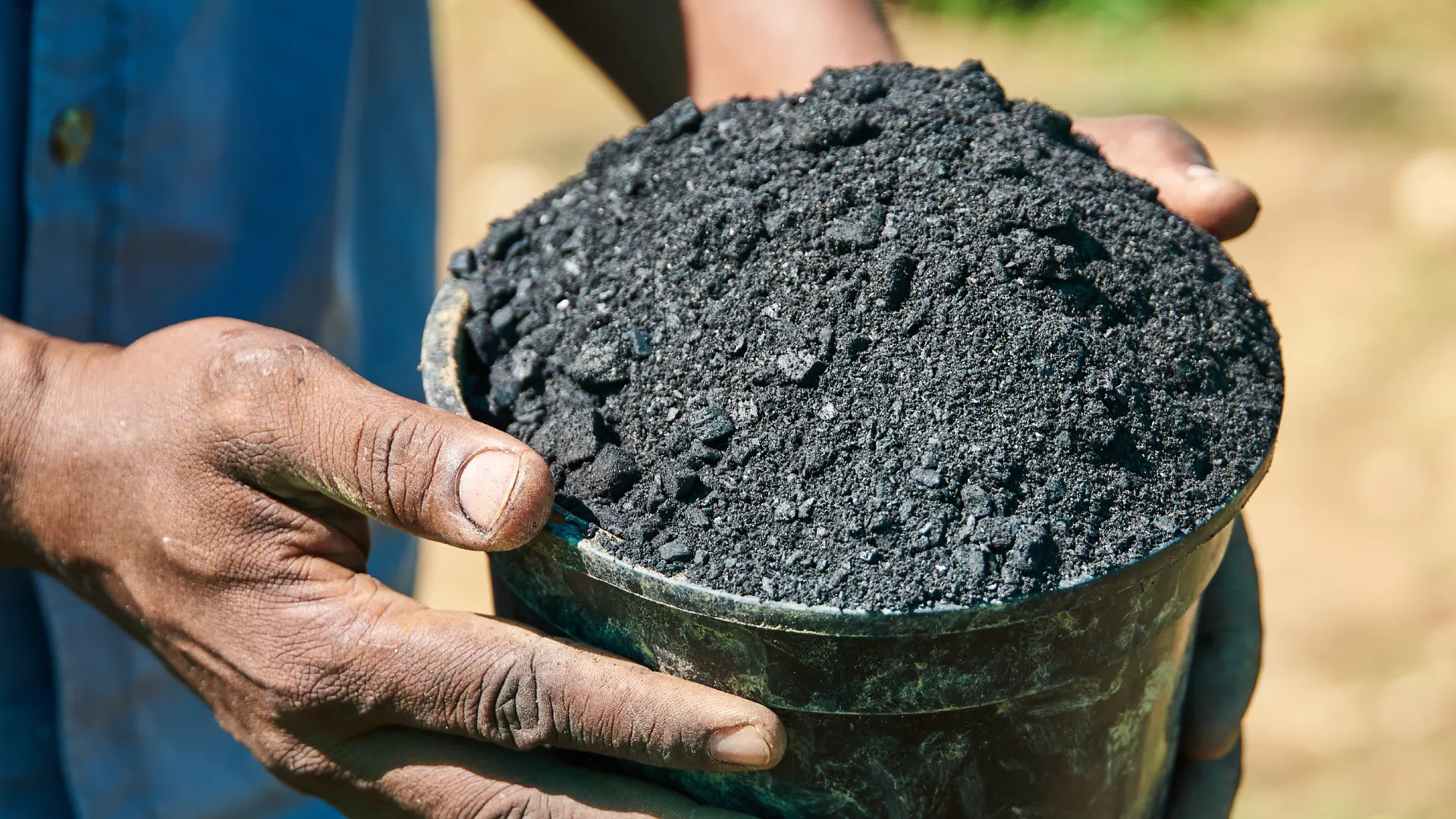
Biochar is a high-carbon material produced through the pyrolysis of natural biomass such as wood, sawdust, rice husk, or other agricultural residues under controlled low-oxygen conditions. This process stabilizes carbon and creates a highly porous structure, making biochar an effective and sustainable material for agricultural and environmental applications.
Thanks to its large surface area and porous microstructure, biochar significantly improves soil aeration, water retention, and nutrient holding capacity. When applied to soil, it helps enhance soil fertility, stimulate beneficial microbial activity, and reduce nutrient leaching, thereby improving crop productivity and long-term soil health.
Biochar is widely used in organic farming, regenerative agriculture, soil restoration, livestock farming, water filtration, and environmental remediation. Its stable carbon structure also contributes to long-term carbon sequestration, making it an important material in climate change mitigation and sustainable land management.
Produced from renewable biomass resources, biochar is an environmentally friendly product that contains no chemical additives or harmful substances. It supports sustainable agricultural practices while promoting circular economy solutions by converting agricultural waste into a valuable soil amendment.
Description
Typical Product Specifications
Application: Soil amendment, organic agriculture, compost additive, water filtration, livestock bedding, carbon sequestration
Raw Material: Natural wood / sawdust / rice husk
Fixed Carbon: ≥ 70%
Moisture Content: ≤ 10%
Particle Size: 1 – 10 mm (customizable)
pH: 7 – 9
Ash Content: ≤ 10%